
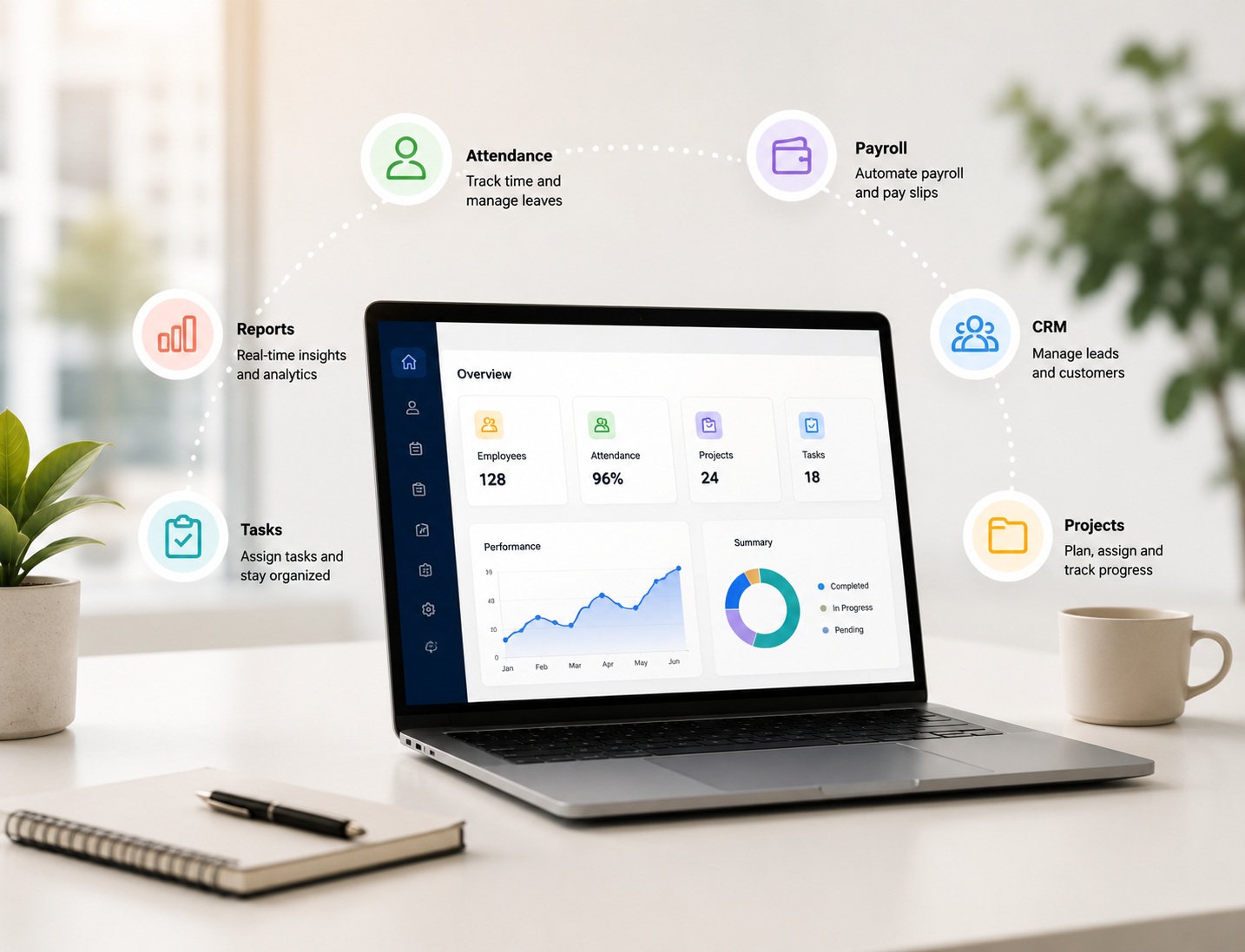
Small and medium-sized businesses often manage employees, attendance, payroll, customer relationships, and projects across multiple tools. As operations grow, this can create duplicate data, manual work, and communication gaps. Choosing the Best Employee Management Software for SMEs can help businesses bring these essential processes together in one centralized platform. Modern solutions such as TeamsMaster are designed to simplify daily operations while improving visibility, productivity, and workforce management.
Why SMEs Need Employee Management Software
SMEs typically operate with limited HR and administrative resources. Managing employee records manually, maintaining attendance spreadsheets, calculating payroll, following up on customer leads, and tracking projects can consume valuable time.
An employee management system provides a centralized environment where businesses can organize employee information, automate routine processes, and monitor workforce activities. Instead of switching between different applications, managers can access important information from one platform.
1. Simplify Employee Attendance Management
Attendance tracking is one of the most important HR responsibilities. Manual attendance registers and spreadsheets can result in errors, missed entries, and difficulties when calculating working hours.
Modern Attendance Management Software can automate attendance recording, leave tracking, working hours, and employee schedules. Businesses can gain better visibility into employee attendance while reducing repetitive administrative work.
For organizations with field employees, remote teams, or multiple locations, features such as GPS-based attendance and employee tracking can provide additional transparency.
2. Automate Payroll Processing
Payroll management becomes more complicated as a company grows. HR teams need to consider attendance, working hours, leave, overtime, deductions, and other employee information.
With Payroll Management Software, businesses can connect attendance data with payroll calculations. This reduces manual data entry and helps minimize calculation errors. Automated payroll can also save HR teams significant time during every salary cycle.
When attendance and payroll information are managed together, businesses can maintain more consistent and accurate employee records.
3. Manage CRM and Customer Relationships
Employee management does not exist separately from business operations. Sales teams also need tools to manage leads, customer information, follow-ups, and sales activities.
An integrated CRM Software solution allows businesses to manage customer interactions alongside employee and operational data. Sales managers can track leads, assign responsibilities, monitor follow-ups, and understand team performance from one centralized system.
This integration can be particularly useful for SMEs that want to avoid maintaining separate systems for HR, sales, and operations.
4. Track Projects and Team Productivity
Project management is another important requirement for growing businesses. Managers need to know who is working on which task, what has been completed, and where work may be delayed.
Team Management Software can help businesses assign tasks, monitor progress, organize responsibilities, and improve collaboration. When project management is connected with employee information, managers can gain a clearer view of workloads and productivity.
This makes it easier to allocate resources and keep projects moving efficiently.
5. Bring Business Operations Into One Platform
Using separate applications for attendance, payroll, CRM, and projects can create disconnected data. Employees may need to enter the same information multiple times, while managers have to switch between different dashboards.
An integrated Workforce Management Software platform brings multiple business functions together. Employee data, attendance, payroll, customer activities, and projects can be managed within a unified environment.
TeamsMaster aims to support this type of centralized workflow, helping SMEs reduce operational complexity and manage everyday business activities more efficiently.
6. Improve Productivity With Automation
Automation is increasingly important for SMEs looking to accomplish more with limited resources. Routine administrative activities can take hours every week when handled manually.
Modern HR Software for SMEs can automate repetitive tasks, provide centralized employee information, and make important business data easier to access. Some platforms also incorporate AI and voice-based functionality, allowing users to perform certain actions using simple commands.
The goal is not simply to replace manual work but to give managers more time to focus on employees, customers, and business growth
How to Choose the Right Employee Management Software
Before selecting a platform, SMEs should evaluate their specific requirements. Important factors include:
Attendance and leave management
Payroll automation
Employee records
CRM capabilities
Project and task management
Reporting and analytics
Mobile accessibility
GPS or field employee tracking
Automation and AI capabilities
Ease of use and scalability
Businesses should also consider whether the software can grow with their organization. A system that supports only basic attendance may become insufficient as the company expands into more locations, employees, or business functions.
Watch Now: CRM Platform for Smarter Field Team Management
Conclusion
The right employee management platform can simplify multiple aspects of SME operations. From attendance and payroll to CRM and project management, an integrated system reduces manual processes and provides managers with better visibility.
For growing businesses, choosing the Best Employee Management Software for SMEs is not just about managing employee records. It is about creating a connected operational environment where HR, sales, projects, and workforce activities can work together more efficiently.